When discussing the most famous ceramic artist, one name consistently rises to the surface across art galleries, museums, and critical discourse: Betty Woodman. However, the question of ceramic art’s greatest master opens a fascinating conversation about how this ancient medium has evolved from functional craft to high art, and how several extraordinary artists have shaped its contemporary landscape.
Betty Woodman: The Undisputed Pioneer
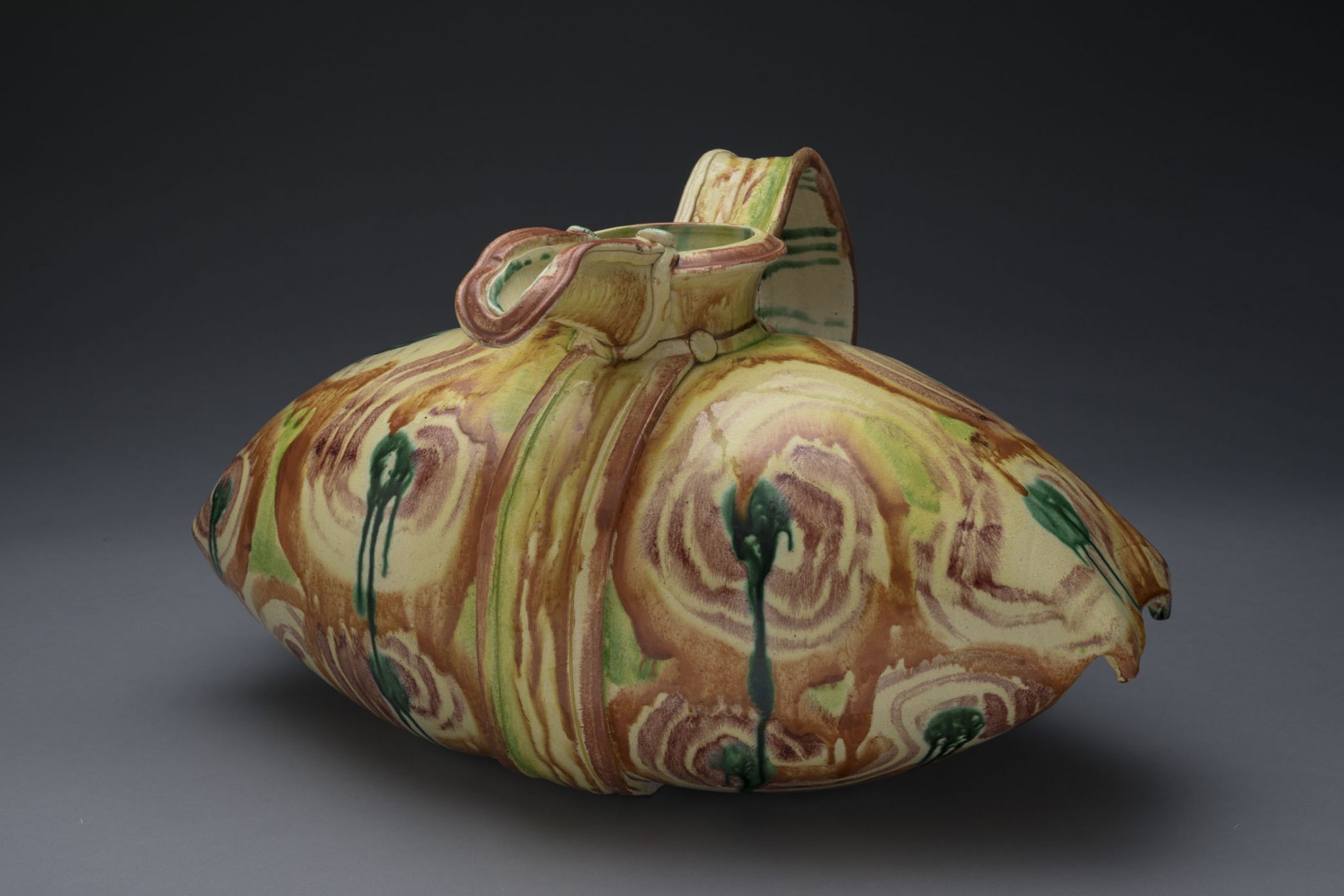
Betty Woodman (1930-2018) is recognized as one of the most important voices in postwar American art, having synthesized sculpture, painting, and ceramics in a highly original and immediately recognizable formal vocabulary. What makes Woodman particularly significant is her role in fundamentally changing how ceramics is perceived in the art world.
Once just something to eat our lunch off or drink from, today we know ceramic works as high art. That newfound respect for the medium can, in part, be put down to the American artist and ceramicist Betty Woodman. British curator Clare Lilley credits Woodman, alongside fellow ceramicists Ken Price and Ron Nagle, with blurring “forever the distinctions between craft and art.”
Woodman’s Revolutionary Approach
Betty Woodman began her nearly seventy-year engagement with clay in the 1950s as a functional potter with the aim of creating beautiful objects to enhance everyday life. In the 1960s, the vase form became Woodman’s subject, product, and muse. Her genius lay in deconstructing and reconstructing traditional ceramic forms to create something entirely new.
Woodman’s work often features a playful dismantling of the conventional ceramic vessel, allowing her to explore the balance between form and function. After a personal tragedy in the 1980s, her career transitioned from functional pottery to more abstract art, showcasing her ability to adapt and innovate continuously.
The breadth of Woodman’s influence is evident in her institutional recognition. Woodman was the subject of numerous solo exhibitions worldwide during her lifetime, including a 2006 retrospective at The Metropolitan Museum of Art, New York—the first time the museum dedicated a survey to a living female artist.
The Contemporary Titans

While Woodman may hold the title of most transformative ceramic artist, several other figures have achieved remarkable fame and influence in the contemporary ceramic world.
Grayson Perry: The Provocateur
Grayson Perry is nothing but radical. While he’s been cited as “an artist who happens to make ceramics”, his ceramic pieces need no introduction. It was this very medium that threw Perry into the limelight during the era of YBA artists such as Damien Hirst and Tracey Emin.
Perry’s approach is distinctive for its content as much as its craft. Grayson Perry challenges established norms in the ceramics world by presenting thought-provoking narratives that are both irreverent and socially charged. His contribution to the field is evident in his fearlessness to explore themes like identity, gender, and societal expectations using the vessel as a canvas for commentary.
Edmund de Waal: The Poet of Porcelain
Edmund de Waal is a figure in the field of ceramics renowned for his ability to infuse poetry into porcelain. His unique contribution lies in blending techniques with contemporary aesthetics. Through this approach, he has reimagined porcelain as a medium for conveying narratives.
De Waal’s installations are monumental in scale and emotional impact. Edmund de Waal is known for his large-scale installations of porcelain vessels, often creating works that engage with memory, history, and cultural displacement.
The New Generation
The ceramic art world continues to evolve with exciting new voices. Artists and artisans working with ceramics have steadily contributed to the art world for centuries… In the contemporary art world, this was never more clear than in 2014, when ceramics arguably achieved peak popularity.
Contemporary artists are pushing boundaries in unprecedented ways. Even as collectors drop millions on ancient objects, a new generation is embedding all kinds of messages in their multifarious ceramic creations. Artists like Simphiwe Mbunyuza and Woody De Othello are bringing fresh perspectives that incorporate cultural identity, social commentary, and innovative techniques.
The Global Perspective
Fame in ceramic art isn’t limited to Western artists. Shio Kusaka from Japan but now based in Los Angeles brings a cross-cultural perspective to her ceramic creations. Her work exemplifies the fusion between Japanese craftsmanship and a contemporary global sensibility.
The medium’s versatility continues to attract artists from diverse backgrounds, each bringing their unique cultural perspectives and techniques to the ancient craft.
Why Betty Woodman Stands Apart

While many ceramic artists have achieved significant recognition, Betty Woodman’s claim to being the most famous rests on several factors:
- Historical Impact: She fundamentally changed how ceramics is perceived in the art world
- Institutional Recognition: Major museums collected and exhibited her work extensively
- Longevity: Her career spanned nearly seven decades
- Innovation: She successfully bridged the gap between craft and fine art
- Influence: Her work influenced generations of ceramic artists
Woodman’s work is in numerous permanent collections worldwide, including The Metropolitan Museum of Art, New York, NY; Museum of Fine Arts, Boston, MA; Los Angeles County Museum of Art, CA; Museum of Modern Art, New York, NY; and many others.
The Future of Ceramic Art
Artists working in the medium continue to maintain a steady foothold in art-world venues. “Ceramics is a medium that, with every passing decade, becomes easier for the untrained to manipulate—more rampant, versatile, and demystified, and perhaps more worthy of a clarified position within the wider history of sculpture”.
The ceramic art world today is more vibrant and diverse than ever, with artists continuing to challenge traditional boundaries and explore new possibilities within this ancient medium.
Conclusion
While the title of “most famous ceramic artist” could be debated, Betty Woodman’s transformative impact on the field, combined with her extensive institutional recognition and lasting influence, makes her the strongest candidate for this distinction. However, the beauty of contemporary ceramic art lies in its diversity—from Perry’s provocative narratives to de Waal’s meditative installations to the exciting work of emerging global artists.
The ceramic art world continues to evolve, with new voices constantly emerging to challenge our understanding of what clay can become. In this dynamic landscape, fame may be shared among many, but Woodman’s pioneering role in elevating ceramics from craft to high art ensures her lasting place as the medium’s most transformative figure.